
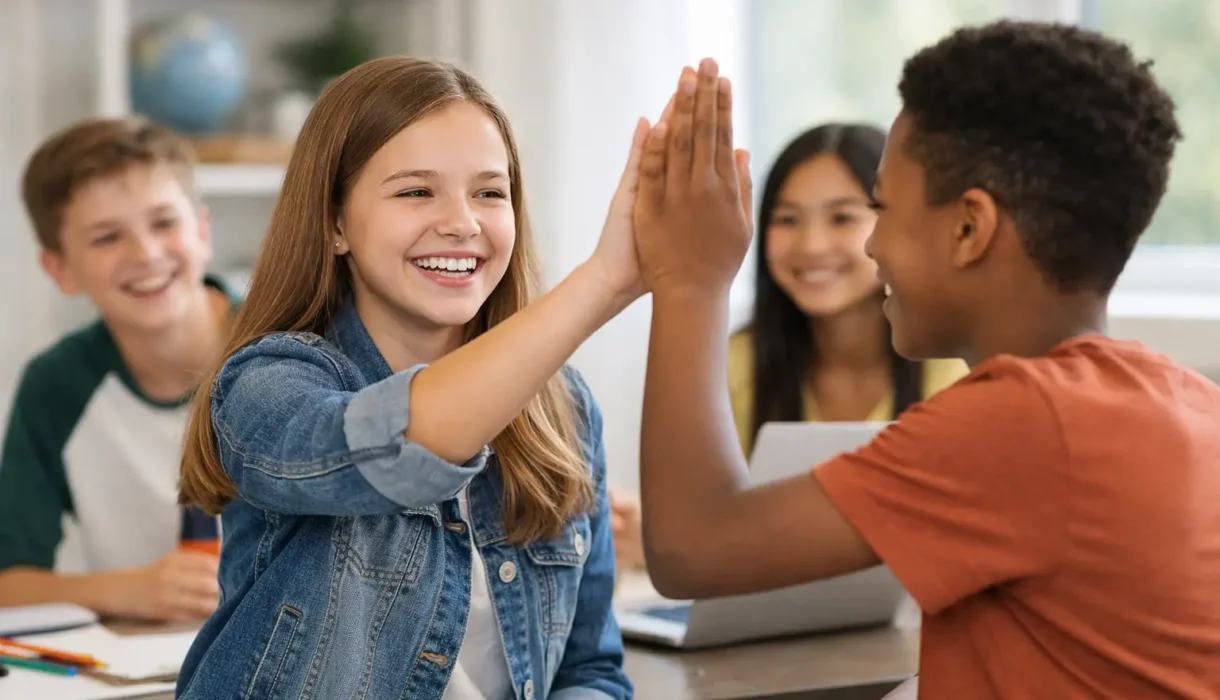

A child can be doing well academically and still need more chances to practice joining a conversation, sharing an idea, handling a disagreement, or working toward a goal with others. Homeschool peer interaction is not about filling every hour with activities. It is about giving children steady, positive opportunities to grow alongside peers while keeping the individual attention and flexibility families value in homeschooling.
For many Houma-area families, that balance is one of the biggest questions in choosing a homeschool path. Parents want a safe setting, meaningful relationships, and a school-day routine that helps their child feel connected. They also want to avoid placing children in large, impersonal environments where a quiet student may disappear into the crowd.
The good news is that social growth does not require a crowded classroom. It grows through consistent, guided experiences with peers and caring adults who notice each child.
Why Homeschool Peer Interaction Matters
Children learn social skills by using them. A younger student may learn to wait for a turn during a game, ask a classmate to join an activity, or use respectful words when feeling frustrated. An older student may learn to contribute to a group project, listen to a different viewpoint, encourage a teammate, or take responsibility when plans change.
These are not extra lessons separate from education. Communication, cooperation, self-control, and confidence shape how students participate in learning, family life, future work, and their community. When children feel comfortable around peers, they are often more willing to raise a hand, try a new activity, and recover from small mistakes.
Quality matters more than a long list of acquaintances. A child does not need to be surrounded by dozens of peers every day to develop strong social skills. In fact, smaller, familiar groups can be especially helpful for students who are shy, easily overwhelmed, or still learning how to speak up. They have time to be known, practice, and build trust.
What Meaningful Peer Time Looks Like
Healthy interaction is more than a quick hello before an activity begins. Children benefit most when peers have a reason to cooperate, communicate, and enjoy time together. Guided academic work creates one kind of connection. A student may compare reading responses, solve a problem with a partner, or explain an idea to a small group.
Hands-on activities create another. During a science project, art activity, game, or community-building exercise, students learn how to share materials, take turns, and appreciate another person’s contribution. These moments can feel natural because the focus is on doing something together, not forcing a friendship.
Movement and enrichment are equally valuable. Sports teach teamwork and perseverance. Martial arts can strengthen discipline, respect, and self-control. Dance classes encourage expression, coordination, and confidence. Spanish enrichment gives students a chance to learn, practice, and celebrate progress together. Each setting gives a child a different way to belong.
The goal is not to make every child outgoing. Some children leave an activity energized by conversation, while others need a little quiet time afterward. Both are normal. Meaningful peer interaction respects a child’s personality while gently helping them grow beyond what feels familiar.
The Value of a Consistent Small Group
One-time field trips and occasional playdates can be wonderful, but consistency is what turns social opportunities into real confidence. When students see the same peers regularly, they move beyond introductions. They remember one another’s strengths, share inside jokes, work through misunderstandings, and learn how to be dependable friends.
A structured small-group setting also gives adults a chance to guide children in the moment. If a student hangs back, a caring teacher can invite them into a partner activity without putting them on the spot. If two students disagree, an adult can help them use respectful words and find a solution. If a child makes progress, that effort can be recognized right away.
This guidance matters. Children do not simply need access to peers. They need an environment where kindness, discipline, respect, and encouragement are part of the daily culture. In the right setting, students learn that they can be themselves while also learning how their choices affect others.
Supporting Different Social Needs at Home
Parents do not have to choose between homeschooling and a rich social life. The best plan often combines home-based family time with dependable opportunities for group learning and enrichment. What that looks like will depend on your child’s age, temperament, interests, and current comfort level.
For a child who is eager to make friends, the focus may be on learning patience, listening, and including others. For a child who is reserved, the first goal may be simpler: greeting a classmate, participating in a game, or speaking once during a small-group activity. Growth is most lasting when expectations are encouraging and realistic.
It can help to ask your child specific questions after group activities. Instead of only asking, “Did you have fun?” try asking who they worked with, what they enjoyed, or whether something felt difficult. Their answers may reveal a new friendship forming, an area where they need support, or an activity that brings out their confidence.
Parents can also model the skills they hope to see. When adults speak respectfully about others, welcome people warmly, apologize when needed, and follow through on commitments, children see what healthy relationships look like. Character-building begins at home and becomes stronger when children have a caring community in which to practice it.
When Peer Interaction Feels Hard
Not every child will walk into a group setting with confidence. Some worry about being left out. Others have had difficult experiences in larger classrooms or need more time to adjust to new routines. That does not mean group learning is not a good fit. It often means the setting and support need to be thoughtful.
A gentle transition can make a meaningful difference. Start with a predictable schedule and a smaller activity where the child can succeed. Let them know what to expect, who will be there, and what they may be asked to do. At first, they may prefer to observe. With patient encouragement, observation can become participation.
Parents should also look for a program where staff members communicate clearly and see students as individuals. A child who struggles socially should not be labeled or pushed into a role that does not fit. They need adults who can recognize small wins: joining a game, offering help, making eye contact, or returning after a challenging day.
A Community That Supports the Whole Child
At Houma’s Best Home School Academy, peer connection is part of a fuller school-day experience, not an afterthought. Students receive guided grade-level academic support and daily structure while learning in a safe small-group environment. Enrichment activities, games, sports, martial arts, dance, and Spanish give children natural ways to build relationships, confidence, and character.
That combination can be especially reassuring for families who want academic guidance without losing the personal care that drew them to homeschooling. Students have room to grow at their own pace, yet they are also part of a community that notices their effort and celebrates their progress.
Strong friendships cannot be scheduled on command, and every child’s social path will look different. What parents can provide is the opportunity: a steady place where children are welcomed, guided, challenged, and encouraged to practice being good classmates and good friends. With time, those ordinary daily moments can help a child carry greater confidence into every part of life.