
A child may be doing well academically and still need more routine, encouragement, or connection during the school day. That is why the choice between online school versus homeschooling is about more than where lessons happen. It is about the kind of support that helps your child feel capable, engaged, and known.
For many Houma-area families, both paths offer welcome flexibility. But they create very different daily experiences for students and parents. Understanding those differences can make it easier to choose an education setting that supports your child’s learning, confidence, and growth.
What Online School Usually Looks Like
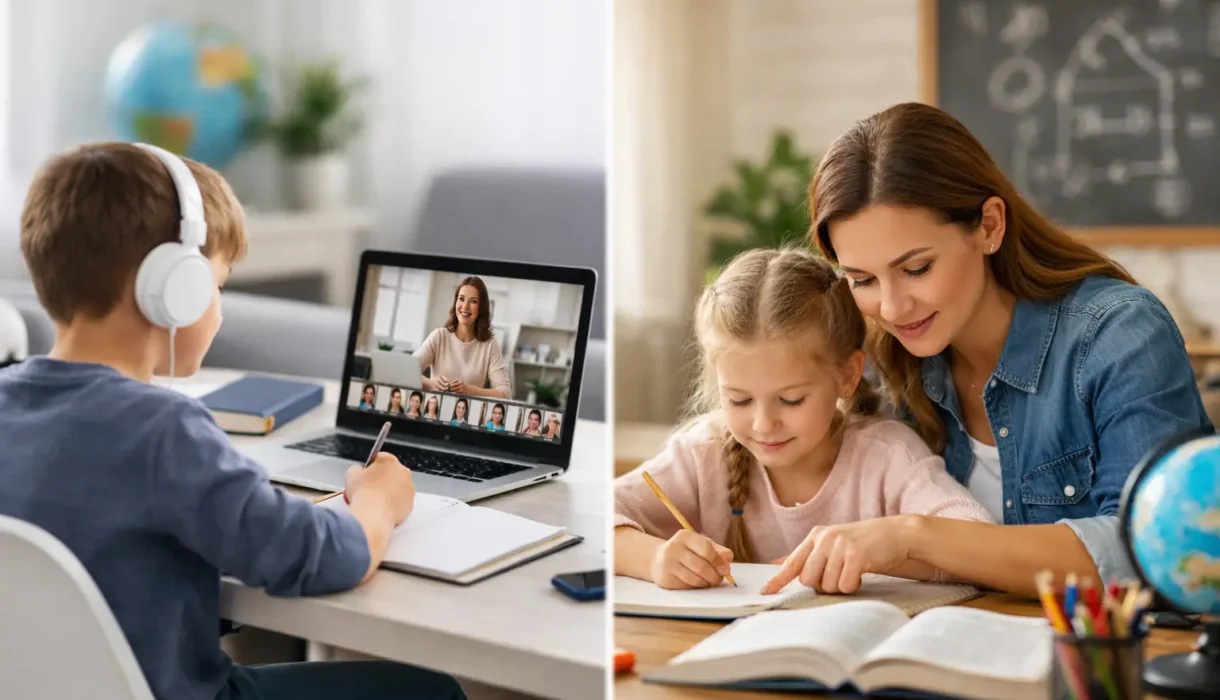
Online school generally means a student completes school through a virtual program. Depending on the program, lessons may include recorded videos, digital assignments, live classes, online discussion boards, and virtual teacher support. Some online schools are public programs with set attendance expectations, while others are private programs with more flexibility.
The greatest appeal is often convenience. A student can learn from home, avoid a daily commute, and access coursework through a computer. For families with a child who is independent, comfortable with technology, and able to stay focused without much in-person guidance, online school can be a strong fit.
Still, virtual learning asks a lot of students and parents. A child may need to manage logins, deadlines, emails, and assignments with limited face-to-face help. Younger learners especially may need an adult nearby to keep them on task. Even older students can find that a screen-based school day feels isolating or makes it harder to ask for help when they are confused.
Online school is not necessarily the same as homeschooling. The parent may have less control over the curriculum, schedule, and pacing, particularly in a full-time virtual school. The child is learning at home, but the program often directs what is taught and when work is due.
What Homeschooling Can Offer Families
Homeschooling gives parents more freedom to shape their child’s education. Families can choose curriculum, adjust the pace of lessons, spend more time on difficult subjects, and build learning around a child’s interests and needs. A student who learns quickly in math or needs extra reading practice does not have to move at the exact speed of a large class.
This flexibility can be especially meaningful for children who need a calmer environment, have medical or family scheduling needs, or thrive with individualized attention. Homeschooling also gives families room to include practical learning, field trips, community service, faith-based instruction, or enrichment activities that matter to them.
But freedom comes with responsibility. Parents often become the planner, instructor, motivator, record keeper, and problem solver all at once. They must create a consistent routine, choose materials, monitor progress, and find ways for children to interact with peers. For a working parent or a parent teaching multiple children at different grade levels, that responsibility can feel heavy.
Homeschooling does not have to mean doing everything alone. Many families find that their children flourish when home learning is supported by a dependable local program with academic guidance, group learning, and a caring routine.
Online School Versus Homeschooling: The Daily Differences
The best choice usually becomes clearer when parents picture an ordinary Tuesday morning rather than an ideal school year. Ask what your child needs when the lesson is challenging, when motivation is low, or when they want to talk with another student.
Structure and accountability
Online school often provides a pre-set course sequence and digital deadlines. That can be helpful for families who want a program to direct the academic calendar. However, the parent may still be responsible for making sure the child logs in, participates, and completes work.
Homeschooling allows families to build their own schedule. That can feel freeing, but it also requires steady follow-through. Some children do well with a relaxed pace; others need a predictable start time, daily learning goals, and an adult who notices when they are falling behind.
A structured homeschool support setting can offer a helpful middle ground. Children keep the personal attention and flexibility of homeschooling while gaining routines that make school days feel purposeful and dependable.
Teaching support
With online school, teacher support is often available virtually. A student may message a teacher, attend a live session, or wait for feedback on an assignment. That works well for some learners, especially students who are comfortable speaking up online.
In a parent-led homeschool, support is immediate when a parent understands the subject and has the time to teach it. Yet many parents understandably feel less confident in certain grade levels or subjects. They may also worry about whether their child is keeping pace academically.
Small-group instruction can make a meaningful difference. A child can ask questions in the moment, receive encouragement, and benefit from someone who understands grade-level expectations. Personalized guidance is not about rushing a student through a worksheet. It is about helping them understand, try again, and build confidence.
Social connection
Children can make friends in online school, but the interaction is often virtual and limited to class chats or scheduled meetings. For some students, that is enough. For others, it does not replace working beside peers, sharing a laugh at lunch, playing a game, or practicing communication in person.
Homeschooling families can create rich social lives through co-ops, church groups, sports, volunteer activities, and community classes. The challenge is that these opportunities take planning and may not happen consistently during the school week.
Regular in-person group learning gives children repeated opportunities to develop friendship skills, respect, teamwork, and confidence. Activities such as sports, martial arts, dance, games, and Spanish enrichment add more than variety. They help children discover strengths that may not show up in a traditional academic lesson.
Screen time and engagement
Many online programs require students to spend significant time in front of a screen. Digital tools can be useful, but a full day of videos and assignments may not suit every child. Younger students, active learners, and children who lose focus easily may need more hands-on instruction and movement.
Homeschooling makes it easier to balance books, projects, conversation, outdoor time, and real-world experiences. A family can use online resources without making the computer the center of every lesson. The key is having enough structure to ensure that flexibility does not turn into unfinished work or daily conflict.
Which Option Fits Your Child?
There is no one right answer for every family. Online school may be a good fit for a self-directed student who enjoys independent computer-based work and benefits from an established virtual curriculum. Homeschooling may be a better fit for a family that wants greater control over learning pace, content, and daily routines.
Consider your child’s temperament as carefully as their academic needs. Does your child stay focused alone, or do they need reminders and encouragement? Are they energized by technology, or do they learn best through conversation and hands-on activities? Do they have regular opportunities to build friendships and practice being part of a group?
Also consider what your family can realistically sustain. A plan that looks good on paper must work when life is busy, work schedules change, and a child hits a difficult subject. The right education choice should support the whole family, not leave parents feeling that they must carry every responsibility without help.
A Supported Homeschool Option Close to Home
For families who want the benefits of homeschooling without handling every part alone, an academy-based homeschool program can provide welcome consistency. At Houma’s Best Home School Academy, K-12 students receive guided grade-level academics, daily learning goals, small-group attention, and opportunities to learn alongside peers in a safe, encouraging setting.
This approach honors the flexibility families value while adding the structure many children need to thrive. It also makes room for character-building, movement, creativity, and community. A shy child can find their voice. A struggling learner can receive patient guidance. An independent student can continue growing without losing the support of caring adults and classmates.
The decision does not have to be between complete independence and a computer screen. Your child deserves an educational path that provides both guidance and room to grow, with people nearby who believe in their potential.