
A child who is confident solving a math problem at the kitchen table may still hesitate when it is time to join a group, speak up, or try something new. That is one reason martial arts classes for homeschoolers can be such a meaningful part of a child’s week. They give students a place to move, learn, practice self-control, and grow alongside peers in a setting with clear expectations and caring guidance.
For homeschool families, martial arts is not simply another after-school activity. It can become a steady part of the routine that supports the same goals parents value in their children’s education: focus, perseverance, respect, healthy habits, and confidence.
More Than Kicks and Forms
Martial arts classes teach physical skills, but their deeper value is often found in the habits students build over time. Children learn to listen carefully, follow directions in sequence, wait for their turn, and keep trying when a movement does not feel natural right away. Those are skills that carry into reading assignments, group projects, chores, and everyday family life.
A good class does not expect every child to learn at the same pace. Some students are ready to step forward and demonstrate a new skill. Others need time to observe before they participate fully. With patient instruction and a consistent routine, both kinds of learners can make progress.
The goal is not to make children aggressive. In fact, quality martial arts instruction emphasizes self-control. Students learn that strength includes knowing when to stay calm, use respectful words, and walk away from unnecessary conflict. For parents who want character-building opportunities that are active and engaging, that message matters.
Why Martial Arts Classes for Homeschoolers Fit So Well
Homeschooling gives families valuable flexibility, but it can also make it harder to create regular opportunities for physical activity and peer connection. A scheduled martial arts class provides a dependable reason to get moving, be part of a group, and practice showing up prepared.
This structure can be especially helpful for children who struggle with transitions. When students know that certain days include academics, enrichment, movement, and time with friends, their school week can feel more balanced and predictable. A child may be more willing to concentrate during a reading lesson when they know an active class is coming later in the day.
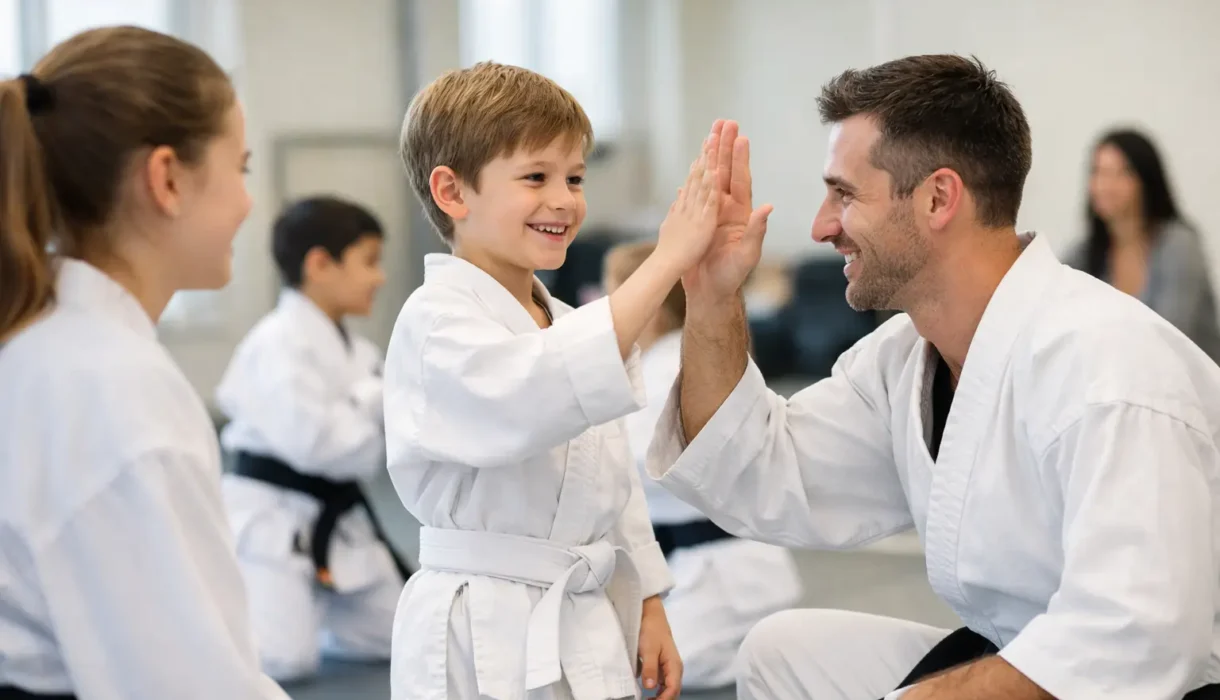
Martial arts also gives children a type of progress they can see and feel. A new stance becomes steadier. A series of movements becomes easier to remember. A student who once stood quietly at the back of the room may begin to volunteer. Belts and other milestones can be encouraging, but the real reward is recognizing, “I worked at this, and now I can do it.”
Confidence That Grows Through Practice
Confidence is not always loud. For many children, it begins with a small moment of courage: trying a new movement, joining a partner activity, or returning after a difficult class. Martial arts creates many of these manageable challenges.
Each class gives students a chance to practice being beginners without shame. They learn that mistakes are part of learning, not proof that they cannot succeed. That lesson is particularly valuable for homeschool students who may be used to working independently or within the comfort of home.
For shy students, the class environment can offer a gentle way to connect. They do not have to carry a conversation to participate. They can stand with the group, follow the routine, and gradually become more comfortable around others. Over time, shared practice can lead to friendships and a stronger sense of belonging.
For energetic children, martial arts provides a constructive outlet. Instead of simply being told to “settle down,” they can channel energy into controlled movement, purposeful drills, and clear goals. The right class respects a child’s need to move while teaching them how to manage their body and attention.
Discipline Without Harshness
Parents often hear that martial arts builds discipline, but discipline should not mean fear or embarrassment. At its best, discipline is the ability to make thoughtful choices even when something is challenging. It is putting forth effort, respecting the instructor and classmates, and staying with a task long enough to improve.
Students learn these habits through repetition. They line up, listen, practice, reset, and try again. The expectations are simple and consistent. This can be reassuring for children who benefit from routine, especially when their learning needs or personalities are different from those of their siblings.
The lessons can follow children back into their academic work. A student who learns to practice a form several times may better understand why handwriting, multiplication facts, or reading fluency improve with repeated effort. Martial arts does not replace academic instruction, but it can reinforce the mindset that learning takes patience.
Physical Activity Supports the School Day
Children need opportunities to move, stretch, build coordination, and release energy. A homeschool schedule can make room for this, but it takes planning. Between lessons, errands, household responsibilities, and work commitments, physical activity can sometimes become an afterthought.
Martial arts offers guided movement with a purpose. Students work on balance, flexibility, coordination, strength, and body awareness. They also learn to pay attention to space around them and move safely with others. These are useful skills for young children still developing motor control and for older students who need a healthy break from screens and desk work.
The level of physical challenge should match the child. A kindergartener may benefit most from basic movement, listening skills, and simple routines. An older student may appreciate more complex forms, conditioning, and leadership opportunities. The best program meets students where they are while encouraging steady growth.
A Place to Practice Respect and Friendship
Peer interaction is one of the questions many families consider when choosing a homeschool path. Children do not need a crowded classroom to build social skills, but they do need regular chances to cooperate, communicate, and learn alongside others.
In martial arts, students practice respect in practical ways. They learn to listen when someone else is speaking, give partners enough space, encourage classmates, and respond appropriately to correction. They experience being part of a group where every person is expected to contribute to a safe, positive atmosphere.
Friendships often develop naturally when children share goals and routines. A student may remember the classmate who helped them learn a sequence or the friend who cheered when they earned a new belt. These connections can make the homeschool experience feel less isolated and more rooted in community.
At Houma’s Best Home School Academy, martial arts is part of a broader approach that recognizes students as whole people. Along with guided academics, small-group learning, sports, dance, games, and enrichment, it gives children opportunities to grow in confidence both inside and outside the learning space.
What Parents Should Look for in a Class
Not every martial arts program will be the right fit for every child. Before enrolling, parents should consider the instructor’s approach, the age range of the class, and whether the environment feels encouraging and well supervised. A child should leave class feeling challenged, respected, and safe.
Ask how instructors handle behavior, corrections, and beginner students. Look for clear routines and age-appropriate expectations rather than a one-size-fits-all approach. It also helps to consider practical details, including class times, transportation, cost, and whether the schedule supports your family’s academic priorities instead of creating more stress.
If your child is hesitant, encourage them without forcing an immediate outcome. Some children need a few classes to feel comfortable. Others may discover right away that they enjoy the structure and movement. The goal is not perfection on the first day. It is finding a supportive place where your child can keep growing.
A homeschool education can be full of meaningful learning at the table, in the community, and through hands-on experiences. Adding martial arts gives children one more place to stand a little taller, practice perseverance, and discover the quiet strength that comes from showing up and trying again.