
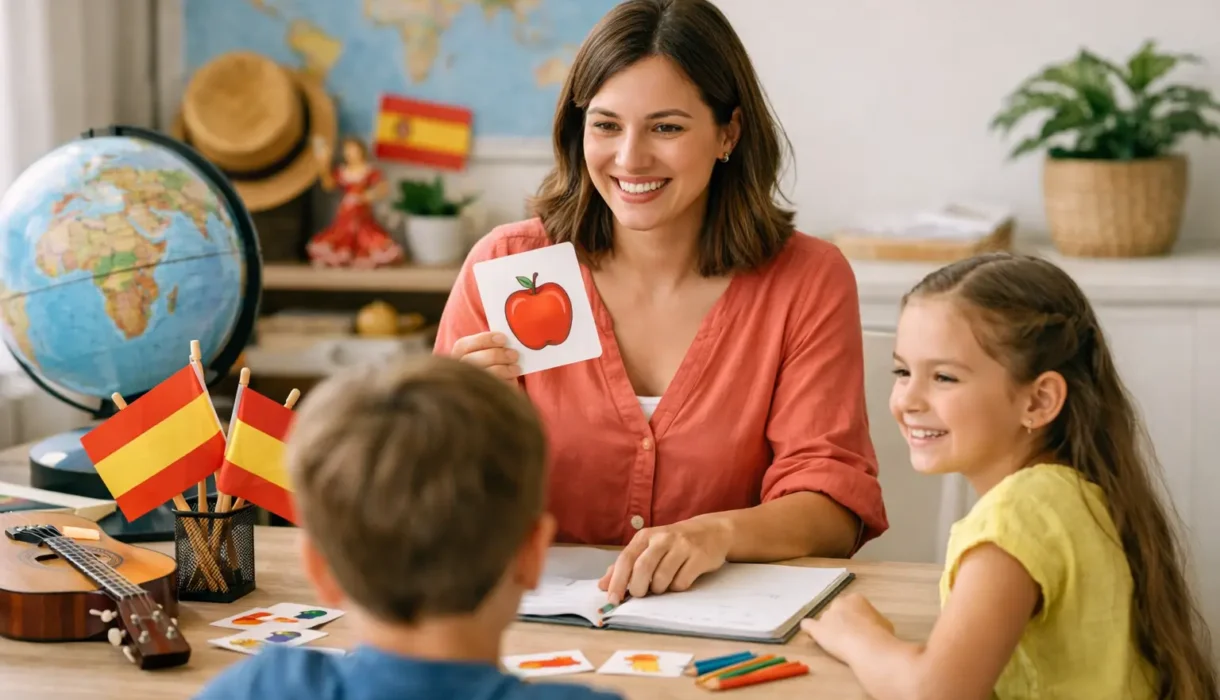

A child who can greet a new friend, name the food on a family menu, or proudly share a Spanish phrase at home is doing more than memorizing vocabulary. They are learning that communication can be joyful. Spanish enrichment for homeschoolers gives children a meaningful way to grow in confidence while adding color, conversation, and cultural awareness to their school week.
For many Houma families, homeschooling offers welcome flexibility and personal attention. At the same time, parents often want help creating a full learning experience that includes group interaction, consistent instruction, and opportunities to try something beyond the core subjects. Spanish can meet all of those needs when it is taught in a way that feels active, encouraging, and connected to real life.
Why Spanish Belongs in a Well-Rounded Homeschool Day
Spanish is often introduced as a foreign language requirement, especially as students approach high school. That is a practical reason to include it, but it is not the only reason. Language learning helps students listen carefully, notice patterns, remember details, and communicate with more intention. Those habits support reading, writing, and learning across subjects.
It also invites children to see the world with greater respect. When students learn a greeting, a song, a tradition, or the names of everyday objects in another language, they begin to recognize that there are many ways to express an idea and many communities beyond their own. That awareness can grow into curiosity, kindness, and confidence around people from different backgrounds.
For homeschool families, Spanish enrichment can also bring a fresh rhythm to the day. A child who needs extra support with a challenging math lesson may light up during a movement game, a call-and-response activity, or a conversation practice with classmates. Enrichment is not a break from learning. It is another way for learning to become memorable.
Spanish Enrichment for Homeschoolers Works Best When It Is Active
Young children do not usually learn language best by completing pages of isolated word lists. Older students need more than vocabulary drills, too. They benefit from hearing words used in context, practicing without fear of embarrassment, and returning to the same skills often enough for them to stick.
A strong Spanish enrichment experience combines structure with participation. Students may practice greetings, colors, numbers, common classroom words, family terms, food, weather, or simple questions. They can repeat phrases together, play games that require listening, match words and pictures, take turns speaking, and celebrate progress as a group.
This kind of learning matters because every child enters the room differently. Some students are eager to raise their hands. Others need time to listen before speaking. A small-group setting gives quieter learners room to participate without feeling overlooked, while confident students can continue stretching their communication skills.
The goal is not to pressure a child into perfect pronunciation on the first day. The goal is to help them feel safe enough to try. When students learn that mistakes are part of practice, they carry that courage into other academic subjects and into everyday life.
What Progress Can Look Like at Different Ages
For elementary students, progress may sound like singing along with familiar words, responding to a simple question, or identifying objects around the room. These early wins build a positive relationship with language and help children feel proud of what they can do.
Middle school students can begin connecting vocabulary into short phrases and conversations. They may describe basic preferences, talk about family members, follow classroom directions, or participate in partner activities. At this stage, the social side of learning is especially valuable. Students gain practice speaking in front of peers in a supportive environment.
High school students may need Spanish for future coursework, graduation planning, work, travel, or personal goals. Enrichment can reinforce foundational skills and provide regular practice that makes later language study feel less intimidating. The right pace depends on the student. Some need a gentle introduction; others are ready for more challenge and responsibility.
The Benefit of Learning With Other Students
Homeschooling can provide focused academic time, but families often look for dependable opportunities for children to learn alongside peers. Spanish naturally creates those opportunities. Students hear different voices, practice taking turns, encourage one another, and experience the energy that comes from learning as a group.
There is a meaningful difference between watching a language video alone and answering a classmate who asks, “¿Cómo estás?” One is exposure. The other is communication. Both can be useful, but students often remember language more deeply when it is connected to a real person, a shared activity, and a moment of laughter or accomplishment.
Group learning also supports social confidence. A child may arrive hesitant to speak, then gradually become the student who volunteers to lead a game or help a classmate remember a word. Those moments are especially important for shy learners and for students who have struggled to feel successful in traditional classroom settings.
At Houma’s Best Home School Academy, Spanish enrichment is part of a larger academy experience designed to support the whole child. Alongside guided academics, students have opportunities for activities that encourage movement, discipline, creativity, character, and friendship. This balanced approach helps children see school as a place where they can work hard, belong, and grow.
How Parents Can Support Spanish at Home Without Adding Pressure
Parents do not need to speak Spanish fluently to encourage a child’s learning. In fact, a simple, interested response can make a lasting difference. Ask your child to teach you a new word from class. Let them label a few household items, practice a greeting at dinner, or share a song or game they enjoyed.
Keep the tone light. If a child forgets a word, offer encouragement rather than turning the moment into a quiz. Language develops through repeated exposure, and every child’s timeline is different. Ten cheerful minutes of practice a few times a week can be more helpful than a long, stressful session.
It can also help to connect Spanish to what your child already loves. A student interested in cooking might learn food words. A sports fan may enjoy action words and numbers. A child who loves art can practice colors and shapes. When vocabulary has a personal connection, it is easier to remember and more exciting to use.
A Few Signs an Enrichment Program Is a Good Fit
Parents should look for an environment where children are known by name, encouraged to participate, and given clear expectations. The program should have enough routine that students know what to expect, while still leaving room for games, conversation, and hands-on learning.
It is also wise to consider how the program fits your family’s larger homeschool plan. Spanish enrichment should support your child’s grade-level goals without creating unnecessary stress. For some families, it is a welcome introduction to language learning. For others, it is a steady layer of practice alongside a more formal curriculum. Both approaches can be valuable.
Most of all, look for a setting that treats growth as more than a test score. A child who becomes more willing to speak up, more curious about other cultures, or more comfortable working with peers is making real progress.
A Language Experience That Builds More Than Vocabulary
Spanish gives homeschool students practical skills, but its greatest gift may be the confidence that comes from trying something new. With patient guidance, regular practice, and the support of classmates, children can discover that their voices matter in more than one language.
A warm learning community gives that confidence somewhere to grow. When children are encouraged to participate, respected as individuals, and surrounded by people who want to see them thrive, every new word can become one more reason to stand a little taller.