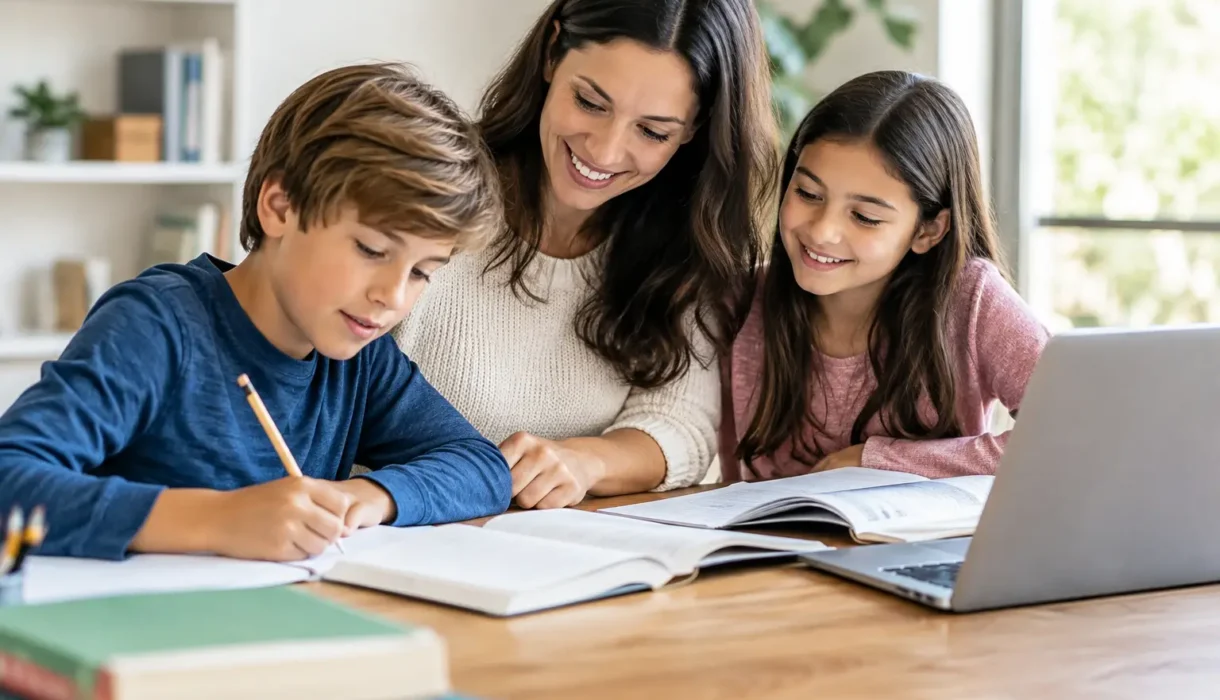

A child who once hesitates to read aloud may begin raising a hand in a small group. A teenager who struggles to stay on task may learn how to plan the day and finish work with pride. These moments matter because homeschool outcomes are not measured only by a workbook page or a test score. They are also seen in a student’s confidence, habits, relationships, and willingness to keep trying.
For many Houma-area families, homeschooling offers welcome flexibility and personal attention. At the same time, parents often want reassurance that their child will have consistent academics, meaningful peer interaction, and guidance that keeps learning moving forward. The best outcomes tend to grow where children have both individual support and dependable structure.
What Strong Homeschool Outcomes Look Like
Every student begins in a different place, so strong results do not look identical for every family. One child may make major progress in reading fluency. Another may gain the confidence to speak up, solve a problem independently, or return to a subject that once felt frustrating. A student who is already doing well academically may benefit most from greater challenge, leadership opportunities, and room to pursue personal interests.
Academic growth remains an important part of the picture. Children need clear grade-level goals, regular practice, feedback, and a way to see what they have learned. When lessons are organized and adults pay attention to progress, families can identify gaps early instead of allowing a small struggle to become a larger one.
But academic growth is only one outcome. Children also need to practice listening, communicating, taking turns, handling disappointment, and working respectfully with others. These are everyday skills that help students thrive in future classrooms, jobs, activities, and communities. A homeschool setting can support these skills especially well when it includes regular opportunities to learn alongside peers.
Structure Helps Learning Become a Habit
One of the greatest strengths of homeschooling is flexibility. Families can adjust pacing, give extra time to a difficult concept, and build learning around a child’s needs. Yet flexibility works best when it is paired with a routine children can count on.
A consistent school day helps students understand when it is time to focus, ask questions, complete assignments, take breaks, and transition into activities. Over time, that rhythm builds responsibility. Rather than relying on a parent to repeat every instruction, students begin learning how to gather materials, follow directions, manage time, and take ownership of their work.
This does not mean every day must look exactly the same. Some children need movement breaks. Others need a quiet space before they can concentrate. Older students may need more independence, while younger children need closer guidance. The goal is not rigid scheduling for its own sake. It is a dependable pattern that gives students security while leaving room for individual needs.
For parents, structure also makes progress easier to see. When daily goals, completed work, and areas of difficulty are organized, conversations about school become clearer and less stressful. Instead of wondering whether enough was accomplished, families can look at steady evidence of growth.
Small Groups Create Both Support and Belonging
Parents sometimes worry that homeschooling may limit social opportunities. The concern is understandable, but social growth is not simply about being around a large number of children. It is about having positive, supervised chances to build friendships, practice communication, and feel that you belong.
Small-group learning can be especially valuable because students are known. An instructor can notice when a quiet child has something to say, when a student needs extra explanation, or when two children need help working through a disagreement. Students have space to contribute without feeling lost in a crowd.
These relationships can change how children see themselves. A shy learner may discover that classmates value their ideas. A child who has felt behind may learn that asking for help is a strength. An independent student may learn patience and leadership by encouraging someone else. Confidence grows when children experience success and know there are caring adults and peers beside them.
Peer connection also makes learning more engaging. Reading together, participating in games, completing hands-on projects, and celebrating a finished assignment can bring energy to the school day. Children remember that learning is not something they must face alone.
Homeschool Outcomes Need More Than Worksheets
Worksheets and curriculum have a place, but whole-child development requires more. Students need chances to move their bodies, use their creativity, explore new skills, and practice self-discipline. Enrichment activities can reinforce lessons while giving children healthy ways to build confidence.
Sports and active games teach teamwork, perseverance, and good sportsmanship. Martial arts can encourage discipline, respect, and self-control. Dance supports coordination and expression. Spanish enrichment introduces students to language and culture, while hands-on activities can make ideas feel more real and memorable.
These experiences are not distractions from learning. For many children, they are part of what keeps learning sustainable. A student who has spent time moving, creating, or working with classmates may return to academic work with renewed focus. The balance will depend on the child and family, but a well-rounded program recognizes that personal growth and academic success support one another.
Progress Should Be Personal, Not Pressured
Healthy homeschool outcomes come from high expectations paired with realistic support. Children should be encouraged to work hard, but they should not be compared constantly to another student’s timeline. Progress is rarely a straight line. A child may move quickly in math while needing more time to gain reading confidence. Another may understand lessons well but need help with organization or test-taking.
Regular check-ins help adults respond wisely. When a student is struggling, the answer may be additional practice, a different explanation, smaller steps, or more time. When a student is ready for more, the answer may be a deeper project or increased responsibility. Personalized guidance gives children a better chance to feel challenged without feeling defeated.
Parents also deserve support in this process. Homeschooling asks families to make many decisions about curriculum, schedules, motivation, and progress. A dependable local academy can reduce that pressure by providing guided academics, a consistent routine, and adults who understand how children learn in different ways.
At Houma’s Best Home School Academy, students can receive grade-level guidance in a warm small-group environment while families retain the personal benefits that draw them to homeschooling. That combination can be especially reassuring for parents who want their children to have both individual attention and a trusted community.
The Long-Term Results Families Hope For
The strongest outcomes often appear gradually. They show up when a child starts a task without being reminded, speaks with more confidence, recovers from a mistake, or talks excitedly about something learned that day. They appear when students develop discipline without losing curiosity, and independence without losing the ability to ask for help.
For older students, these habits can prepare them for the next step, whether that means higher education, career training, work, service, or another path. For younger students, the foundation is just as meaningful: a sense that school is a place where they are safe, capable, and supported.
No educational path can promise the same result for every child. Family involvement, student needs, consistency, and the quality of support all matter. Still, children are far more likely to flourish when they are given clear expectations, patient guidance, real friendships, and opportunities to discover their own strengths.
The most encouraging measure of progress may be simple: a child who feels seen, supported, and ready to take the next step. When that happens day after day, learning becomes more than a requirement. It becomes a source of confidence that can strengthen a child, a family, and the Houma community for years to come.