
A child who comes home discouraged after a crowded, fast-moving school day may need something different from a child who thrives on a busy campus and a full calendar of activities. That is why the question of home education versus public school is rarely answered by test scores alone. It is about how your child learns, what your family needs, and where your child feels known, supported, and ready to grow.
For Houma-area families, the choice does not have to be between complete independence at home and a traditional public-school schedule. A supported homeschool setting can offer a meaningful middle path: the flexibility families value, alongside dependable routines, academic guidance, and a caring community.
Home Education Versus Public School: What Changes Day to Day
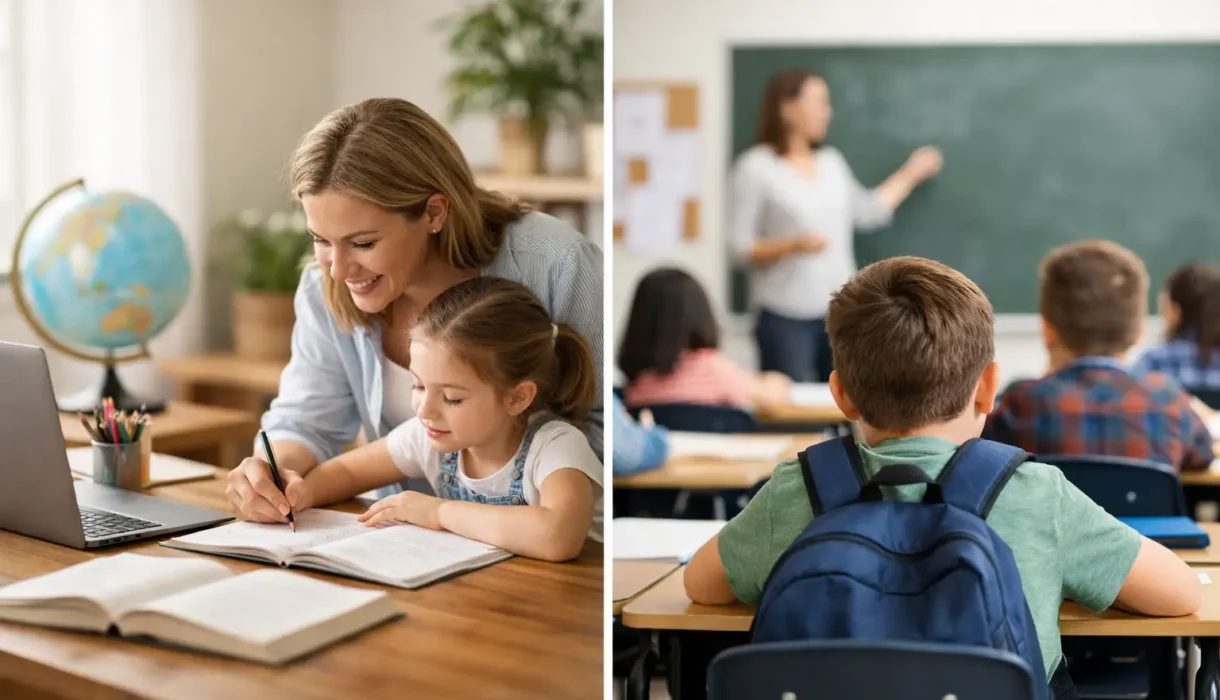
Public school provides a familiar structure. Students follow a set calendar, move through classes with a larger group of peers, and learn within a district-designed schedule. For some children, that consistency and range of school-based programs are a strong fit. They enjoy the energy of a larger campus, adapt well to classroom pacing, and benefit from seeing many different teachers and classmates each day.
Home education gives families more say in the daily rhythm. A student may spend extra time on a difficult math skill, move ahead in a favorite subject, or learn through hands-on projects that make a lesson feel real. Families can also shape the environment around their child’s needs, whether that means fewer distractions, more movement breaks, or a calmer place to rebuild confidence.
That flexibility does come with responsibility. Parents often carry the work of organizing lessons, monitoring progress, keeping a consistent routine, and finding opportunities for children to learn with others. For a family balancing work, younger siblings, or uncertainty about teaching certain subjects, those responsibilities can feel heavy without support.
A structured homeschool academy helps share that load. Children can still learn in smaller groups and receive personal attention, while parents have a dependable school-day framework and guidance they can trust.
Academic Pace and Personal Attention
One of the clearest differences between the two options is pacing. In a public-school classroom, teachers work hard to meet many needs at once, but the class must usually continue according to a shared timeline. A child who needs more explanation may feel rushed. A child who understands the material quickly may spend long periods waiting for the next lesson.
Home education allows a more individualized pace. This can be especially helpful for students who are struggling, shy about asking questions, returning from a difficult school experience, or ready for a greater challenge. Instead of viewing a child as behind or ahead, a supportive homeschool approach begins with where that student is and builds forward from there.
Individualized learning should not mean lowering expectations. Children still need clear goals, steady practice, feedback, and accountability. The strongest home education programs combine personal attention with grade-level academic direction, so students have both encouragement and a clear sense of progress.
Structure Is Not the Opposite of Flexibility
Some parents worry that homeschooling will feel too loose, while others worry that a structured program will take away the freedom they want. In reality, children often do best with both.
A predictable start time, daily learning goals, and regular check-ins create security. Within that framework, teachers and parents can adapt instruction when a child needs another example, a different approach, or time to explore an interest more deeply. Flexibility works best when it is supported by a plan.
Friendships, Confidence, and Belonging
Social development is one of the biggest questions families ask when comparing home education and public school. Public school naturally places children among many peers each day. That can create friendships and help students practice communication, teamwork, and independence. It can also be overwhelming for some children, particularly those who are quiet, anxious, or still learning how to handle social pressure.
Home education does not have to mean learning alone. The quality of a child’s social experiences matters as much as the number of people around them. Small-group learning gives students room to speak up, collaborate, and form friendships without getting lost in a large crowd. Activities such as sports, dance, martial arts, games, and enrichment classes also give children natural ways to connect while building discipline, respect, and confidence.
For many families, this is the difference they are seeking: a community where children are noticed. A student can practice making friends, trying new things, and participating in a group while still receiving the patient guidance that helps them feel safe.
Support for Parents Matters Too
The school choice conversation often focuses on children, as it should. Yet parents need support as well. A family may choose home education because they want more involvement in learning, but that does not mean they have to become curriculum experts, full-time planners, and activity coordinators all at once.
Public school can reduce the planning burden because instruction, schedules, and services are already organized. However, families may have less flexibility when a child needs a different pace or when school routines are not working well for their household.
With home education, parents have greater input, but reliable guidance makes that freedom more manageable. They benefit from knowing that academic goals are being followed, questions can be answered, and their child has a consistent place to learn. This kind of partnership lets parents remain closely connected to their child’s education without feeling that they must carry every responsibility alone.
Houma’s Best Home School Academy is built around that partnership, offering K-12 families a structured setting where guided academics, small-group instruction, enrichment, and personal encouragement work together.
When Public School May Be the Right Fit
There is no prize for choosing one path over another. Public school may be a good fit when a child is thriving in the larger school environment, feels connected to teachers and classmates, and benefits from the programs available on campus. Some families also need the district schedule and services that public school provides.
If your child is engaged, progressing, and coming home with a healthy sense of belonging, there may be no reason to make a change simply because another option sounds appealing. The right school setting is the one that supports growth, not the one that looks best on paper.
When Home Education May Be a Better Fit
Home education may deserve a closer look if your child needs a more personal learning pace, fewer distractions, or additional time to build confidence. It can also be a strong option for families seeking greater involvement in daily learning, a safer-feeling environment, or a routine that better matches their values and needs.
A supported homeschool program can be particularly helpful when parents want flexibility but do not want to sacrifice structure or peer interaction. Children can receive academic attention, practice social skills, and take part in activities that develop the whole person – not only the student completing assignments.
Questions That Can Clarify Your Decision
Before deciding, pay attention to your child’s real experience. Are they excited to learn, or regularly shut down? Do they feel comfortable asking for help? Are they making meaningful connections with peers? Is the current schedule helping your family function well, or creating daily stress?
Also consider what support you would need if you chose home education. A successful plan should include academic direction, consistent routines, opportunities for friendship, and adults who can encourage your child through challenges. The answer may change over time, and that is okay. Children grow, family circumstances shift, and a learning environment that fit last year may need adjusting this year.
The best choice is not about proving that home education or public school is better for every child. It is about giving your child a place to be challenged, cared for, and understood – a place where they can build the confidence to keep growing.