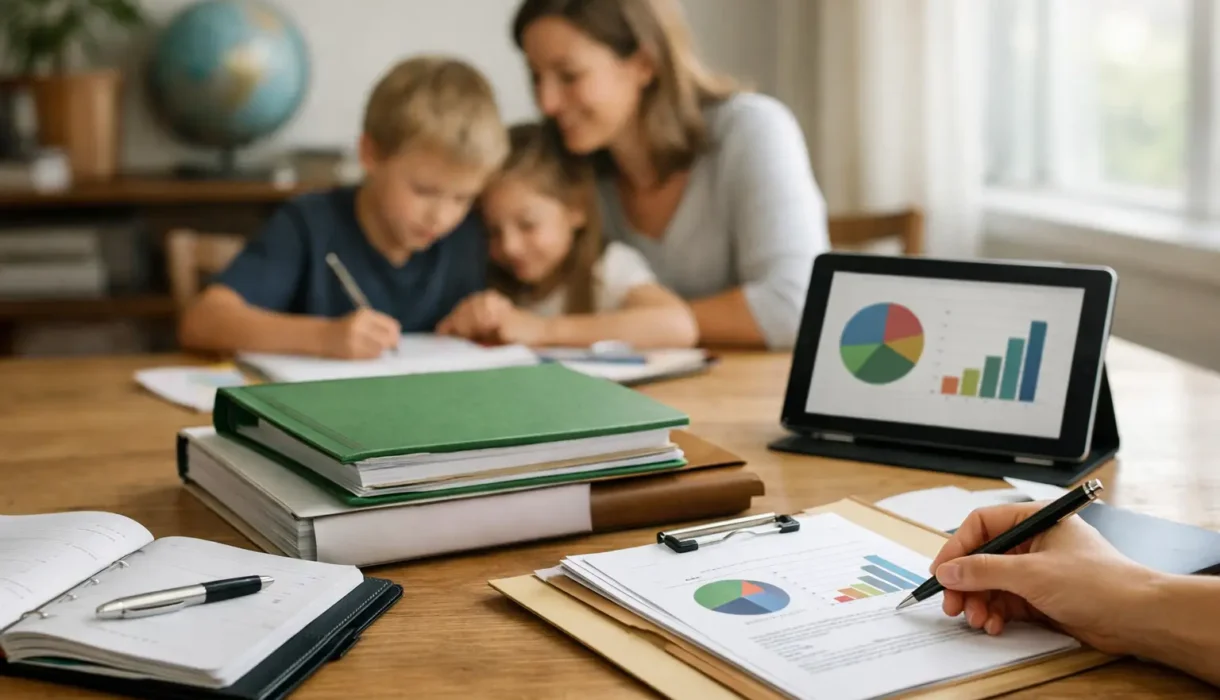

A full school year can pass quickly when your days are filled with lessons, reading practice, field trips, sports, appointments, and the everyday work of raising a family. A guide to homeschool recordkeeping gives those busy days a clear paper trail – one that helps you see your child’s growth, answer questions with confidence, and keep the school year from feeling scattered.
Recordkeeping is not about creating perfect binders or saving every worksheet your child completes. It is about keeping a simple, honest picture of learning. For Houma families, a steady system can bring welcome peace of mind whether your child learns primarily at home, participates in an academy-based homeschool program, or does a little of both.
Why Homeschool Records Matter
Good records serve your family first. They show where your child started, what they practiced, what became easier over time, and where they may need extra support. When a child has a difficult week in math or struggles to stay motivated, looking back at completed work and earlier progress can remind everyone that growth is happening.
Records can also be useful when you need to plan the next grade level, meet program expectations, prepare for a transition, or document learning for outside activities. Older students may need organized information for transcripts, course descriptions, testing, applications, or future opportunities.
The exact records a family needs can depend on the homeschool option they use and current Louisiana requirements. State rules and family circumstances can change, so it is wise to confirm the current expectations for your enrollment status and keep records that clearly support your child’s educational path.
A Guide to Homeschool Recordkeeping That Stays Manageable
The best system is the one you will actually use in the middle of a busy week. A beautifully labeled filing cabinet does not help if papers end up in the car, on the kitchen counter, or at the bottom of a backpack. Start with a routine that takes just a few minutes at a time.
Choose one physical home for paper records, such as a labeled file box or binder for each student. Then create one digital folder for each child on a computer or secure cloud account. You do not need to scan every page. Digital folders work especially well for photos of projects, writing samples, videos of presentations, and documents you may need to access away from home.
Set aside a brief weekly check-in. File the strongest work samples, update attendance, and write down anything meaningful your child learned that may not appear on a worksheet. A science experiment, a Spanish conversation, a martial arts goal, a dance performance, or a community service activity can all show valuable growth.
Keep an Attendance Record
An attendance log is one of the simplest and most useful records to maintain. Some families prefer a calendar with school days marked off. Others use a monthly spreadsheet or a printed form in a binder. The format matters less than consistency.
Include days when learning happened outside the usual routine. A museum visit, educational field trip, research day at the library, hands-on cooking lesson, or structured enrichment activity may all be part of a meaningful school day. If a day was shortened because of illness, a hurricane-related disruption, or a family emergency, make a brief note and move forward. Your record should be accurate, not stressful.
Save a Few Strong Work Samples
You do not need a mountain of papers to prove learning. Instead, save representative samples from across the year. For younger students, that may include early and later handwriting, reading responses, number work, and artwork. For middle and high school students, keep essays, lab reports, major projects, assessments, and examples that show increasing independence.
Date each sample. If the work needs context, add a short note. For example: “Completed after researching coastal wetlands,” or “Independent persuasive essay, revised after feedback.” These small details make a portfolio much more meaningful than a stack of undated pages.
A child’s best work is worth saving, but so is an occasional before-and-after example. Seeing improvement in reading fluency, problem-solving, organization, or confidence can be encouraging for both parent and student.
Track What You Taught and What Was Learned
A curriculum list or course log provides structure without requiring pages of daily notes. At the beginning of the year, write down the subjects, books, programs, and major resources you plan to use. As the year progresses, update the list with completed units, changed materials, and special projects.
For each subject, a few sentences can be enough. A fourth-grade science note might say that the student studied weather patterns, habitats, and simple experiments. A high school history course description might include the time period studied, major readings, written assignments, and discussion topics.
This record is especially helpful when plans change. Homeschooling offers flexibility, and sometimes the curriculum that looked right in August does not fit your child by October. Changing direction is not a failure. Your records can simply reflect the learning that took place and the approach that helped your child move forward.
Make Space for Whole-Child Growth
Academic work matters, but it is not the only kind of progress families want to see. Children also grow through friendships, teamwork, movement, creative expression, responsibility, and character-building experiences.
Keep a simple enrichment log for activities that support these areas. Record participation in sports, dance, martial arts, clubs, volunteer work, group projects, performances, or leadership opportunities. A short note can capture a big milestone: speaking in front of a group for the first time, showing respect during a challenge, helping a younger student, or practicing discipline toward a new goal.
At Houma’s Best Home School Academy, families can see this kind of growth unfold alongside guided academics, small-group learning, Spanish enrichment, games, sports, martial arts, and dance. These experiences are not separate from education. They help children build confidence, routines, social skills, and a stronger sense of belonging.
Use Progress Notes Instead of Chasing Perfection
A progress report does not have to sound like a formal school document. Once each quarter or at the end of a unit, write a short parent note about what your child is doing well and what comes next. Keep it specific and encouraging.
You might note that your child is reading longer chapter books independently, has become more accurate with multiplication facts, participates more willingly in group discussions, or needs continued practice with paragraph organization. These observations help you make thoughtful decisions about pacing and support.
If your child learns in a structured program with teacher guidance, save communications, feedback, report cards, or assessment results in the same folder. Keeping everything together gives you a fuller view of progress and makes it easier to celebrate the small victories that can otherwise be overlooked.
Recordkeeping for Middle and High School Students
As students get older, records become more detailed because their future plans may require clearer documentation. Begin building a transcript-style record early rather than trying to recreate several years at once. List courses by school year, along with credits or course completion information as appropriate for your homeschool plan.
Keep course descriptions, reading lists, major assignments, grades or evaluations, and standardized test information if applicable. For students taking classes outside the home, include the provider, dates, and any available completion documentation. Career exploration, volunteer service, job experience, dual-enrollment work, and extracurricular leadership may also be valuable to document.
Teenagers should be part of the process. Invite them to help organize their portfolio, choose work they are proud of, and track goals. This builds responsibility while helping them recognize the effort behind their own progress.
A Simple Monthly Routine
At the end of each month, spend 20 to 30 minutes reviewing records. Update attendance, add a few work samples, file any evaluations or communications, and write down notable enrichment experiences. Then look ahead at the next month’s goals.
This small habit prevents the end-of-year scramble. It also creates a natural moment to notice whether your child needs a change in pace, more practice, extra encouragement, or a new challenge. Recordkeeping becomes less about paperwork and more about paying attention.
Your family’s school year does not need to look like anyone else’s to be meaningful. Keep records that tell the true story of your child’s learning – the steady practice, the growing confidence, the setbacks handled with resilience, and the skills that are taking root. A few minutes of care each week can preserve a year of progress your family will be proud to see.