
A child can complete every assignment at the kitchen table and still miss something meaningful: the steady rhythm of learning alongside other children. The strongest homeschool group benefits do not take away a family’s flexibility or values. They add the structure, encouragement, and community that can help children feel more confident in their work and more connected to the people around them.
For many Houma families, homeschooling begins with a desire for a more personal education. Parents want their child to be known, supported, and allowed to grow at a healthy pace. Yet carrying every lesson, schedule, social opportunity, and progress check alone can become difficult. A dependable homeschool group can share that responsibility while keeping parents closely involved in their child’s education.
What a Homeschool Group Can Add to Your Child’s Week
Not every group serves families in the same way. Some meet occasionally for field trips or playdates. Others offer a consistent school-day setting with guided academics, small-group instruction, enrichment, and supervised peer interaction. Both can have value, but families who need reliable academic support often benefit most from a program with a clear routine.
A well-run group is not simply a room full of children working independently. It is a caring learning community where students have goals to meet, adults to ask for help, and peers who are learning beside them. That combination can make a noticeable difference for children who are shy, easily distracted, struggling in a subject, or ready for greater challenge.
1. A predictable routine can lower daily stress
One of the most practical homeschool group benefits is consistency. Children often do better when they know what the day will hold: time to settle in, academic work, teacher guidance, breaks, and activities that let them move and connect. A routine does not have to feel rigid. It simply gives the day a dependable shape.
For parents, that consistency can ease the pressure of trying to create a productive school day while managing work, younger children, appointments, and home responsibilities. Instead of beginning each morning with a negotiation over assignments, families have a plan. Children learn that showing up, preparing, and following through are part of their responsibility.
2. Small-group learning gives children another voice of encouragement
Parents know their children better than anyone, but children sometimes respond differently when another caring adult explains a concept or notices their progress. In a small group, students can receive guidance without getting lost in a large classroom. They have room to ask questions, try again, and build skills at a pace that respects where they are.
This support matters especially when a student hits a difficult season in reading, math, writing, or organization. A parent does not have to feel like the only teacher, coach, and motivator in the room. Group-based support creates another layer of encouragement while honoring the parent’s central role in the child’s education.
3. Peer interaction helps confidence grow naturally
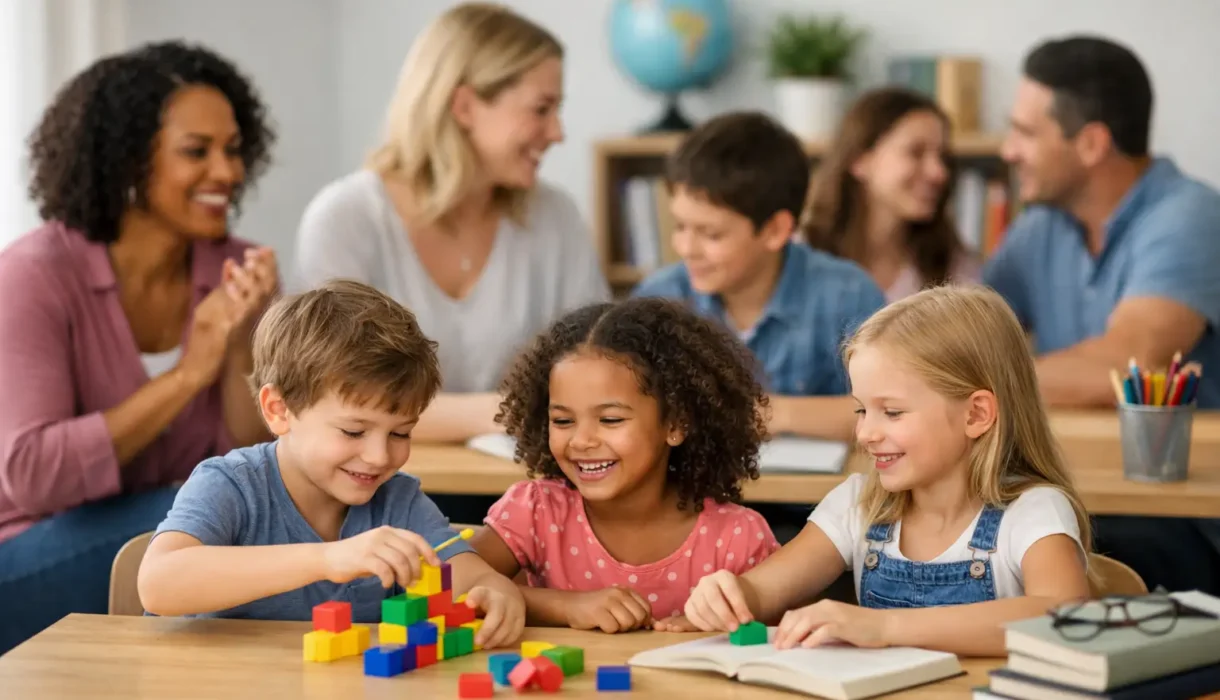
Social growth is not about putting children in a crowded room. It is about giving them safe, repeated chances to communicate, cooperate, listen, and be themselves. In a familiar homeschool group, students can practice joining a conversation, sharing materials, taking turns, and speaking up during an activity.
Those moments can be especially meaningful for quiet children. A shy student may not suddenly become outgoing, and that does not need to be the goal. But with patient guidance and regular connection, that child may become more comfortable answering a question, working with a partner, or making a friend. Confidence often grows through many small successes.
4. Children learn accountability without losing personal attention
Homeschooling can be highly individualized, which is one of its greatest strengths. Still, children benefit from learning that their work affects more than just themselves. When students arrive with materials ready, complete daily goals, participate respectfully, and keep trying when work is challenging, they build habits that will serve them well beyond the school years.
A group setting offers gentle accountability. Students see peers focusing on a task and learn how to manage their own attention. They experience the satisfaction of completing work in a structured environment. When expectations are clear and adults are supportive, accountability feels less like pressure and more like a path toward independence.
5. Enrichment brings learning to life
A strong education includes more than worksheets and textbooks. Children need opportunities to create, move, communicate, and discover what they enjoy. Spanish enrichment, games, sports, martial arts, dance, and hands-on activities can give students a fuller school experience while supporting skills that matter in everyday life.
Physical activities can strengthen discipline, coordination, and resilience. Creative and language-based experiences invite curiosity and expression. Games can teach strategy, patience, and cooperation. These opportunities also give children natural ways to connect with peers, especially when making conversation feels harder than participating in a shared activity.
6. A supportive group helps parents stay encouraged
Parents choose homeschooling for many good reasons, but even experienced homeschool families can have hard weeks. A child may resist schoolwork, fall behind in a subject, or need a different approach. Parents may wonder whether they are doing enough, even when they are giving their very best.
Being part of a trusted local learning community can replace some of that isolation with reassurance. Families can see that other parents have similar questions and that children develop at different rates. More importantly, they have a place where their child is known and where academic progress can be supported consistently. The goal is not to take control away from parents. It is to help families carry the work of education with greater confidence.
7. Character develops through everyday community
Respect, responsibility, kindness, and self-control are not learned in one lesson. Children practice them when they wait patiently, include someone in an activity, accept correction, finish a task, and handle disappointment with maturity. A caring group gives students regular chances to grow these habits in real situations.
The right environment also helps children understand that discipline and encouragement belong together. They can be held to meaningful expectations while still being treated with patience and dignity. For families who want academic progress and strong character development to work side by side, this daily practice is a valuable part of the experience.
Choosing a Homeschool Group That Fits Your Family
The best choice depends on what your family needs most right now. A casual co-op may be a wonderful fit for a parent who feels confident managing academics at home and mainly wants periodic social activities. A more structured program may better serve a family that needs daily guidance, a consistent learning environment, and help keeping students engaged.
As you consider options, pay attention to the feeling of the program as well as its schedule. Are students treated as individuals? Is there a clear academic routine? Do children have meaningful opportunities to interact, move, and build confidence? Are expectations communicated with both warmth and consistency? A good group should help your child feel supported without making them feel unseen.
For families seeking that balance in the Houma area, Houma’s Best Home School Academy brings guided grade-level academics, small-group support, hands-on learning, and enriching activities together in a setting designed to feel like family. Children receive the structure they need while parents remain connected to the learning journey.
A homeschool group will not make every school day perfect, and it should not replace the values, attention, and love children receive at home. What it can do is give your child a steady place to learn, belong, and practice becoming more independent. When children feel safe enough to ask for help and brave enough to try, growth has room to happen.